Grade Level: Grade One
Topic: Refugees/Immigration
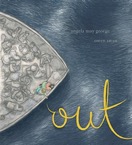
Book Title: “Out”
Author: Angela May George
Link to Purchase: https://a.co/d/5ueLbt0
Link for Online Read-Aloud : https://youtu.be/-CAlovv9xfw?si=MPamIBdBa7V2L15m
Discussion Prompts/Questions:
- Before Reading
- “This book is about a little girl and her mother who were very brave. Have you ever had a time when you needed to be brave?”
- “If you were traveling to a new country, for a visit, or to live there forever, what would you need to do? What would you pack? How would you travel?”
- “What do you know about the word ‘refugee’? What does it mean?”
- During/After Reading
- “What do you notice about the traveling pictures? What does this tell us about how the little girl is feeling?”
- “Why do you think that the little girl hid under her table when there was a loud bang?”
- “After the little girl and her Mom are safe, what do you notice about the pictures in the book?”
- Stop reading on the next to the last page, where the little girl is looking out the open door. “What do you think the little girl sees? How do you think that the story is going to end?”
- On a re-read, or a reviewing picture walk, have students pay attention to the yellow ribbon in the story. How is it used or changing throughout the book?
Follow-Up Activity:
- Create a travel centre in your classroom. Encourage students to pretend that they are moving to a new place, and that they have to decide what to take with them.
- Play a word game together:
- The first person starts off by saying, “I’m going on a trip and I’m bringing…” followed by something that begins with A, such as “…apples” or “…artichokes”
- The second player repeats what the first person said, but adds an item that begins with B. “I’m going on a trip and I’m bringing apples and boots.”
- You then continue on with the letter C, being sure to remember the A and B words that were said previously.
- As you get further into the alphabet it will get harder to remember all of the other items. Encourage collaboration and help!
- See how far the class can get before they forget their trip items.
BC Core Competency Connections:
Personal and Social
- Positive Personal and Cultural Identity
- I am aware of myself as different from others.
- Social Awareness and Responsibility
- I am aware that other people can be different from me.
- In familiar settings, I can interact with others and my surroundings respectfully.
- I can identify when something is unfair to me or to others.
Thinking
- Creative Thinking
- I get ideas when I use my senses to explore.
- Critical Thinking
- I can explore with a purpose in mind and use what I learn.
Communication
- Communicating
- In familiar settings, I communicate with peers and adults.
- I can understand and share basic information about topics that are important to me.
- Collaborating
- In contribute during group activities, cooperate with others, and listen respectfully to their ideas.
BC Curricular Connections:
- Understand (Big Ideas):
- Stories and other texts help us learn about ourselves and our families. (ELA 1)
- Everyone has a unique story to share. (ELA 1)
- Through listening and speaking, we connect with others and share our world. (ELA 1)
- Healthy communities recognize and respect the diversity of individuals and care for the local environment. (SS 1)
- Learning about ourselves and others helps us develop a positive attitude and caring behaviours, which helps us build healthy relationships. (Physical and Health Education 1)
- Know (Content):
- Diverse cultures, backgrounds, and perspectives within the local and other communities. (SS 1)
- Rights, roles, and responsibilities of individuals and groups. (SS 1)
- Cultural and social awareness, achieved by exploring self-identity, acknowledging cultural differences, honouring indigenous traditions. (Career Education 1)
- Caring behaviours in groups and families. (Physical and Health Education 1)
- Do (Curricular Competency):
- Comprehend and connect (reading, listening, viewing)
- Engage actively as listeners, viewers, and readers, as appropriate, to develop understanding of self, identity, and community. (ELA 1)
- Recognize the importance of story in personal, family, and community identity. (ELA 1)
- Use personal experience and knowledge to connect to stories and other texts to make meaning. (ELA 1)
- Create and communicate (writing, speaking, representing)
- Exchange ideas and perspectives to build shared understanding. (ELA 1)
- Recognize causes and consequences of events, decisions, or developments in their lives. (SS 1)
- Acknowledge different perspectives on people, places, issues, or events in their lives. (SS 1)
- Identify fair and unfair aspects of events, decisions, or actions in their lives and consider appropriate courses of action. (SS 1)
- Share ideas, information, personal feelings, and knowledge with others. (Career Education 1)
- Develop and demonstrate respectful behaviour when participating in activities with others. (Physical and Health Education 1)
- Comprehend and connect (reading, listening, viewing)
FPPL Link:
- Learning ultimately supports the well-being of the self, the family, the community, the land, the spirits, and the ancestors.
- Learning involves recognizing the consequences of one’s actions.
- Learning is embedded in memory, history, and story.
- Learning requires exploration of one’s identity.
BC ELF Link:
- Early years spaces are inclusive.
- Play is integral to well-being and learning.
- Relationships are the context for well-being and learning.
- Learning is holistic.
TFT Through-line Link:
- Justice Seeking
- Community Building
 Social Justice for Little Learners
Leave a comment