Grade Level: Kindergarten
Topic: Racial Identity and Racism
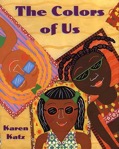
Book Title: “The Colors of Us”
Author: Karen Katz
Link to Purchase: https://a.co/d/aH97qxR
Link for Online Read-Aloud : https://youtu.be/D15MkLUyneE?si=XJAzB4FQzCJ5ud6H
Discussion Prompts/Questions:
- If possible (consider the perishable items, allergies, etc), take in some of the spices/foods/items from the book (cinnamon, butterscotch, ginger, chili powder, French toast, peanut butter, honey, dark chocolate, milk chocolate, pizza crust or crusty bread, amber, coconuts, coffee, toffee…) for students to look at and smell.
- “What does Lena notice as she travels through her town? How is this the same or different from our town?”
- “How do you think that the people in the town are feeling? Are they happy or sad? Do they feel included or alone?”
Follow-Up Activity:
- Explore “Colours of the World” crayons by Crayola and find “just right matches” for each colour described in the book.
- Ask students to find a “just right” crayon to trace and colour in their hands. They can add details to sleeves, nails, etc. Have students cut the handprints out (assist as needed).
- Post the hand prints in the hallway, with descriptive writing (likely scribed), using the prompt “I like myself! I call my skin the colour of ___________.”
- Set up play options (dolls, kitchen, sorting, etc) using a variety of diverse dolls/toys/images, and encourage students to play!
BC Core Competency Connections:
Personal and Social
- Positive Personal and Cultural Identity
- I am aware of myself as different from others.
- Social Awareness and Responsibility
- I am aware that other people can be different from me.
- In familiar settings, I can interact with others and my surroundings respectfully.
- I can identify when something is unfair to me or to others.
Thinking
- Creative Thinking
- I get ideas when I play.
- Critical Thinking
- I can explore materials and actions.
Communication
- Communicating
- In a safe and supported environment, I respond meaningfully to communication from peers and adults.
- In familiar settings, I communicate with peers and adults.
- Collaborating
- In familiar situations, I can participate with others.
BC Curricular Connections:
- Understand (Big Ideas):
- Stories and other texts help us learn about ourselves and our families. (ELA K)
- Everyone has a unique story to share. (ELA K)
- Through listening and speaking, we connect with others and share our world. (ELA K)
- Our communities are diverse and made of individulas who have a lot in common. (SS K)
- Learning about ourselves and others helps us develop a positive attitude and caring behaviours, which helps us build healthy relationships. (Physical and Health Education K)
- People create art to express who they are as individuals and community. (Arts Education K)
- Engagement in the arts creates opportunities for inquiry through purposeful play. (Arts Education K)
- Know (Content):
- Ways in which individuals and families differ and are the same. (SS K)
- Rights, roles, and responsibilities of individuals and groups. (SS K)
- Cultural and social awareness, achieved by exploring self-identity, acknowledging cultural differences, honouring indigenous traditions. (Career Education K)
- Caring behaviours in groups and families. (Physical and Health Education K)
- Personal and collective responsibility associated with creating, experiencing, or sharing in a safe learning environment. (Arts Education K)
- Do (Curricular Competency):
- Comprehend and connect (reading, listening, viewing)
- Engage actively as listeners, viewers, and readers, as appropriate, to develop understanding of self, identity, and community. (ELA K)
- Recognize the importance of story in personal, family, and community identity. (ELA K)
- Use personal experience and knowledge to connect to stories and other texts to make meaning. (ELA K)
- Create and communicate (writing, speaking, representing)
- Exchange ideas and perspectives to build shared understanding. (ELA K)
- Use language to identify, create, and share ideas, feelings, opinions, and preferences. (ELA K)
- Recognize causes and consequences of events, decisions, or developments in their lives. (SS K)
- Acknowledge different perspectives on people, places, issues, or events in their lives. (SS K)
- Identify fair and unfair aspects of events, decisions, or actions in their lives and consider appropriate courses of action. (SS K)
- Share ideas, information, personal feelings, and knowledge with others. (Career Education K)
- Develop and demonstrate respectful behaviour when participating in activities with others. (Physical and Health Education K)
- Create artistic works collaboratively and as an individual, using ideas inspired by imagination, inquiry, experimentation, and purposeful play. (Arts Education K)
- Express feelings, ideas, stories, observations, and experiences through creative works. (Arts Education K)
- Comprehend and connect (reading, listening, viewing)
FPPL Link:
- Learning ultimately supports the well-being of the self, the family, the community, the land, the spirits, and the ancestors.
- Learning involves recognizing the consequences of one’s actions.
- Learning is embedded in memory, history, and story.
- Learning requires exploration of one’s identity.
BC ELF Link:
- Early years spaces are inclusive.
- Play is integral to well-being and learning.
- Relationships are the context for well-being and learning.
- Learning is holistic.
TFT Through-line Link:
- Justice Seeking
- Community Building
 Social Justice for Little Learners
Leave a comment